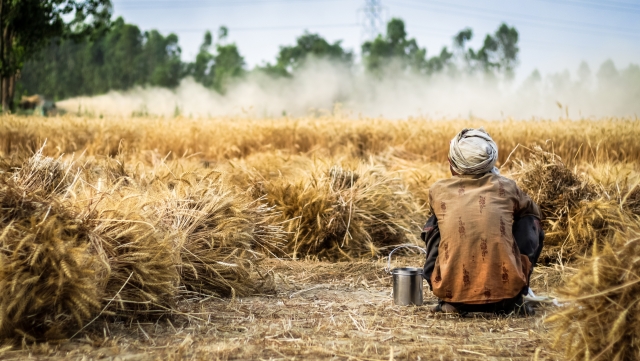
India is expected to face hotter and drier weather in February following an unusually warm January, increasing risks for key winter-sown crops such as wheat, rapeseed and chickpeas, according to the country’s weather office.
The India Meteorological Department said rainfall in the northwestern wheat-growing belt is likely to be less than 78% of the long-term average this month, while both maximum and minimum temperatures across most parts of the country are forecast to remain above normal.
Agricultural experts warn that higher-than-usual temperatures could accelerate crop development, shorten the grain-filling period and lead to yield losses in wheat and barley. In addition, the number of cold-wave days in northwestern and adjoining central India is expected to be below average.
India’s main wheat-producing states — Punjab, Haryana and Uttar Pradesh in the north, along with Madhya Pradesh in central India — were already affected by warm and dry conditions in January, when rainfall was 31.5% below average and temperatures exceeded seasonal norms.
Despite record sowing areas for wheat and rapeseed, at 33.42 million hectares and 8.94 million hectares respectively, market participants say February is a critical month for grain development. Any significant decline in rapeseed output could force India, the world’s largest vegetable oil importer, to increase purchases of edible oils such as palm, soybean and sunflower oil on the global market.