

China to favor Brazilian soy imports in first half despite resumption of US shipments
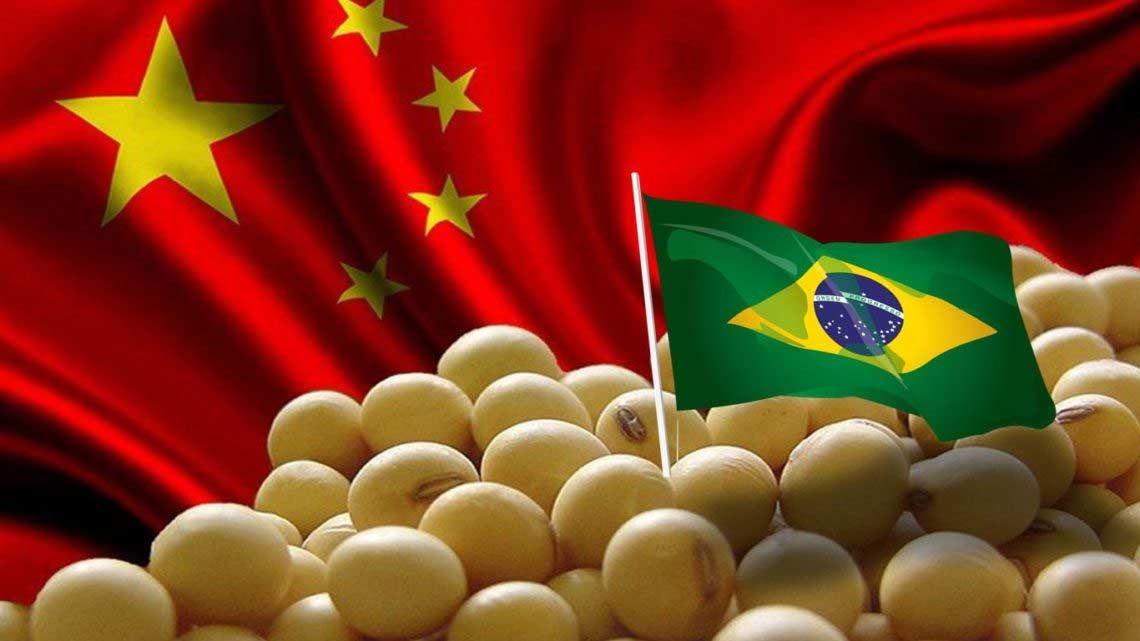
China is expected to increase imports of Brazilian soybeans in the first half of 2026 as record production and competitive prices boost shipments, reinforcing South America’s dominance as the world’s largest oilseed supplier, even as flows from the United States resume.
According to trade sources, private Chinese soy processors are booking Brazilian cargoes starting in February as harvest progress accelerates, increasing supply and driving prices lower.
Such activity could hurt demand for U.S. cargoes when North America’s export season begins in September.
Purchases of about 12 million tonnes of U.S. soybeans since relations between Beijing and Washington thawed in late October were made exclusively by state firms Sinograin and COFCO, as higher U.S. prices pushed out private traders.
Even if Beijing orders additional purchases through state grain traders and storage firm Sinograin to meet commitments under its trade deal with Washington, China’s 13% tariff on U.S. soybeans makes them more expensive for private crushers than Brazilian supplies, which face a 3% duty.
“China’s current purchases of U.S. soybeans are limited and only sufficient to maintain a positive political atmosphere ahead of the April meeting between the two countries’ leaders,” said Dan Wang, China director at political risk consultancy Eurasia Group.
“If further tariff cuts are agreed at the April meeting and certain assurances are obtained on the Taiwan issue, China may commit to buying soybeans, but volumes are likely to remain limited.”
According to traders and analysts cited by Reuters, crush margins for Brazilian soybeans shipped between March and June remain favorable for deals.
“Between March and June, we will likely see higher exports (from Brazil) to China compared with last year,” said a trader at a major international firm. “Brazilian soybeans are much cheaper than U.S. supplies during this period.”
All sources spoke on condition of anonymity due to the sensitivity of the matter.
The market had previously expected China’s purchases of Brazilian soybeans to decline this year as the country bought more U.S. cargoes.
EXPENSIVE U.S. SOYBEANS
Chinese state firms have bought about 12 million metric tonnes of U.S. soybeans since late October, fulfilling Washington’s stated pledge, but volumes remain well below China’s purchases of about 23 million tonnes in the 2024/25 crop year.
On Nov. 18, Brazilian soybeans for December delivery to China were priced at $507.90 per metric tonne, below $516.90 per tonne for Gulf Coast soybeans and $510.50 per tonne for U.S. Pacific Northwest cargoes, excluding duties and logistics costs.
At those prices, China would pay about $31 million to $108 million more for 12 million tonnes of U.S. soybeans than for Brazilian shipments.
China resumed U.S. soybean purchases after the two countries’ leaders met in late October. The White House said China also agreed to buy at least 25 million tonnes a year for the next three years starting in 2026.
On Thursday, U.S. President Donald Trump said he would visit China in April, while his counterpart Xi Jinping will travel to the United States later in 2026.
BIG SOUTH AMERICAN CROP
Traders do not expect further increases in U.S. orders, citing higher prices and forecast record harvests in top producers Brazil and Argentina.
“A big crop makes our product cheaper than U.S. supplies, and that usually holds until new U.S. soybeans arrive in September,” said Adelson Gasparin, a grain broker in southern Brazil, who expects China to maintain current import levels.
According to traders and analysts, Brazilian soybeans shipped in February are at least 50 cents a bushel cheaper than U.S. Gulf Coast cargoes (FOB), and March shipments are up to 75 cents cheaper.
As harvesting accelerates, Brazilian prices are likely to face further pressure.
“I think the gap will widen,” said Dan Basse, president of AgResource Co. “Possibly to a dollar.”
Traders said some purchases may occur during South America’s peak export season, but likely minimal unless China issues a directive to buy U.S. cargoes or South American corn shipments clog Brazilian ports.
“I don’t think it works without state direction,” one trader said.
Brazil’s soybean output in the 2025/26 season is forecast to hit a record 182.2 million tonnes, according to agribusiness consultancy Agroconsult.
Marcela Marini, senior grains and oilseeds analyst at Rabobank, expects Brazil to export about 85 million tonnes to China between September 2025 and August 2026, up 6 million tonnes from the previous year.
According to two Asian traders, China has booked roughly 42–44 million tonnes of Brazilian soybeans for shipment between September and August, including 23–25 million tonnes for February–August.
China’s hog herd remains large despite government efforts to curb overcapacity, and analysts say a significant decline is unlikely before the end of the second quarter, supporting strong soymeal demand in the first half of 2026.
China imported 109.37 million metric tonnes of soybeans in 2024/25, according to the agriculture ministry, with imports expected to fall to 95.8 million tonnes in 2025/26.
For almost 30 years of expertise in the agri markets, UkrAgroConsult has accumulated an extensive database, which became the basis of the platform AgriSupp.
It is a multi-functional online platform with market intelligence for grains and oilseeds that enables to get access to daily operational information on the Black Sea & Danube markets, analytical reports, historical data.
You are welcome to get a 7-day free demo access!!!
Read also
Abbey Commodities – General Partner of BLACK SEA GRAIN.KYIV-2026
Export Logistics Reset 2026: Rail Tariffs, Capacity Pressure and New Trade Reality
ABIOVE has spoken out against the EU’s proposal to phase out soy-based biofu...
Jordan purchased 50 thsd tons of barley in tender
Brazil, Argentina ship 7 mil mt of soybeans to China for Feb-April




Got additional questions?
We will be happy to assist!
Write to us
Our manager will contact you soon