

Alternative to the Strait of Hormuz: Saudi Arabia will transport goods by rail
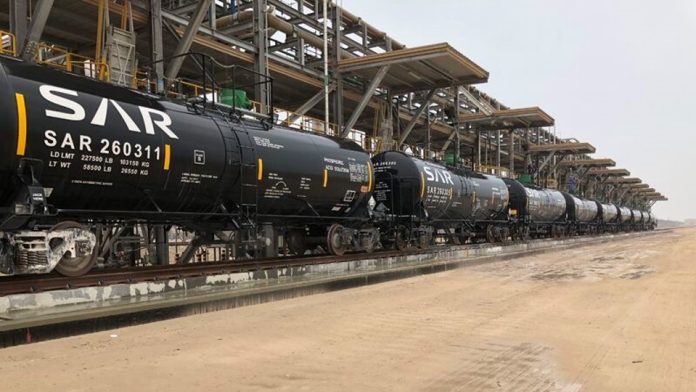
Saudi Arabian Railways (SAR) has launched a new freight route designed as an alternative to the Strait of Hormuz amid significant disruptions to maritime transport in the region. The initiative is a response to the blockade of a key global trade route and geopolitical tensions in the Middle East, which have exacerbated supply chain challenges.
This was reported by Club Feroviar.
The new route connects hubs in the Persian Gulf, including Dammam, the industrial port of King Fahd and the commercial port of Jubail, with the Al-Hadith crossing on the border with Jordan. The railway infrastructure creates a direct link between the Eastern Province of Saudi Arabia and markets in the north of the region, ensuring faster and more stable trade flows.
With this route, Saudi Arabia can get an alternative to the Strait of Hormuz for transporting goods. The corridor provides direct rail access to Jordan and, indirectly, to the Red Sea port of Aqaba and other hubs in the region. The route operates in both directions, allowing for both export and import of goods via a single integrated land route.
The corridor is over 1,700 km long. The new route has the potential to halve transportation times compared to road transport. In addition, a single train can carry over 400 containers, significantly increasing logistics capacity and optimizing trade flows in the region.
SAR representatives emphasize that the project not only diversifies transport routes, but also strengthens the connection between seaports and land crossing points. The new corridor also reduces dependence on long-distance road transport and allows for more efficient use of existing infrastructure.
In addition to the economic benefits, the project has important operational and environmental benefits: it reduces the number of trucks on the road, protects road infrastructure, improves transport safety and reduces carbon emissions by using a more energy-efficient mode of transport.
As it became known, the threat of Iran’s indefinite control over the Strait of Hormuz is forcing Gulf countries to reconsider plans to build oil pipelines to bypass the strait to ensure uninterrupted oil and gas exports.
New pipelines may be the only way to reduce the region’s ongoing vulnerability to disruptions in the Strait of Hormuz, even despite the high costs, political complexity and long implementation time of such projects.
Read also
MERCOSUR Agri Markets: The Forces Reshaping Global Supply
Ukraine Adjusts to Costly Spring Campaign and Builds a New Farming Model
Moroccan grain importers face rising costs amid Middle East conflict
Sunflower oil demand in India may drop 10% amid supply disruptions
Ethiopia’s wheat imports in 2026/27 will remain at 1.4 mln tons




Got additional questions?
We will be happy to assist!
Write to us
Our manager will contact you soon